
Dec 8, 2011 | blog, marketing tips
It is the time of year for making New Year’s Resolutions, so here are some ideas for Marketing Resolutions, and who better to look to for inspiration than Santa?
So why is Santa so effective at marketing himself?
1. Consistent branding
No matter how many different pictures you see of Santa – he always wears that red outfit with a white trim and white beard. While you don’t need to wear the same clothes all the time, do make sure you use the same style, colours and logos on all your marketing – it makes you easy to identify, and makes sure clients recognise your messages.
2. He repeats the message
He is there every year, and handily, lots of other companies repeat the message on Christmas cards and decorations, increasing his visibility. So you need to repeat the message, moving your clients through from Know to Like to Trust, by repeating your advertisements, press releases, emails – once is not enough!
3. Build Credibility for your Brand
When doubt set in about Santa in our house, my daughter insisted we not only had a mince pie and a beer for Santa, and a carrot for Rudolf, but also a Santa footprint in flour on the hearth.
You can build credibility for your brand by becoming an expert in your field – speaking, writing, blogging, Tweeting.
4. Use Online Tools
Yes, even Santa has a Twitter account! His journey round the globe can be tracked live on Norad’s website see www.noradsanta.org – and he has an App!
There are loads of free online tools to help you with marketing – Mail Chimp or Constant Contact for email marketing, Survey Monkey for surveys, WordPress or Typepad for blogs, Google analytics on your website.
5. Give excellent customer service
Santa never fails on customer service – he turns up on Christmas Eve no matter what the weather. Keep your customers happy by giving excellent customer service, then you can get recommendations and testimonials from them, stay in touch with them, then sell them more. It is much cheaper to sell more to your existing clients than to find new ones!
6. Make sure your website can be found on Google
Google Father Christmas or Santa and his website www.northpole.com comes up first on Google because he understands the basics of Search Engine Optimisation. Make sure you do – page titles, links on high ranking sites, and register on Google maps.
So as small businesses, we can learn a lot from Santa!
Author: Beryl Pettitt
Ridgeway Marketing provides Marketing Mentoring and Marketing Training to small businesses and organisations across the UK. Beryl Pettitt has worked in marketing for over 25 years, and her experience spans both the corporate environment and running her own business. She understands the needs and pressures of managing a business, so clients find her advice both practical and affordable.

Dec 1, 2011 | blog, marketing tips
The first thing we all do when we set up a business is spend money – business cards, websites, leaflets, advertising …
But there is so much you could do for free! The truth is that most of us spend too much money, but not enough time on marketing!! So what should you spend your time doing? Here are some ideas….
1. Tell people what you do
Sounds obvious, doesn’t it? But you’d be surprised how often I find it is quite difficult to understand what a company does, particularly if it is offering a service, and also what makes that company better than its competitors – its Unique Selling Point.
2. Target your customers
To do this, you need to know who are they – their age, sex, socio-economic group, nationality, industry sector etc. When do they use your product or service? What do they read or watch? What do they do? Where do they go?
3. Use this information
You can then use this information to reach your potential clients. This could be speaking at the events they go to, writing articles in magazines or newspapers or blogs they read, socialising where they do, putting your leaflets where they are…
4. Repeat the Message
Whichever marketing tools you use, you will need to keep up a steady flow of press releases, mailings, exhibitions, networking events, adverts etc – once is not enough! Marketers often use the AIDA acronym which stands for Attention, Interest, Desire, Action – and you need to move the client through all of these.
5. Use Free Marketing Tools
If you register your business with online directories such as Yell the link will help with the Search Engine Optimisation of your website. Enter competitions and awards – local papers and networking groups often run these, and are desperate for entries. Getting press coverage won’t cost you anything either – more on this in a later article. Social Media tools such as Twitter, Facebook, and Linked-In are all free, and so is giving talks and presentations.
6. Use free online tools
There are lots of free marketing tools available online, such as Mail Chimp and Constant Contact for email marketing, Survey Monkey and Smart Survey for online Surveys, and WordPress and Typepad for blogs. If you haven’t already got Google Analytics on your website, add it so that you can see how many visitors you get, and how they found your site.
7. Use the basics of Search Engine Optimisation
So many company’s websites cannot be found in Google, even for their company name. Make sure you understand the basics of Search Engine Optimisation – having the right page titles, having links on high ranking sites, and for local searches, registering your business on Google maps.
8. Use your Existing Clients
We all tend to emphasise getting new clients, but it is much cheaper to sell more to the ones you have. Make sure you keep them happy, get recommendations and testimonials from them, and use the information you have about them to sell more to them.
9. Write an action plan
The best way to ensure you put all of this into practice is to write a plan with actions. Make sure you agree it with somebody else, to encourage you to put do it. Then when you have actioned it, monitor the results, revise your plan and start again!
10. Measure the Results
You can use some of the tools mentioned above to help you monitor the results. Email marketing programmes will enable you to see who has clicked on what part of your mailing (and follow it up), and Google Analytics will show you how many people are responding to your marketing campaigns and clicking on your website. Just asking enquirers and customers where they heard about you can also help.
If you would to learn more about how to market your small business, you can download our free e-book Ten Top Tips to Improve your Marketing here
Author: Beryl Pettitt
Ridgeway Marketing provides Marketing Mentoring and Marketing Training to small businesses and organisations across the UK. Beryl Pettitt has worked in marketing for over 25 years, and her experience spans both the corporate environment and running her own business. She understands the needs and pressures of managing a business, so clients find her advice both practical and affordable.
Tel 01623 883144
Aug 10, 2011 | blog, marketing tips, marketing training
If you are not keeping in touch with your clients, or have a pile of business cards from networking events and exhibitions, it is time to give some serious consideration to email marketing.
Email marketing is an extremely cost effective way of getting more business from your existing clients and from new contacts. By sending useful information in personally addressed emails, you can build a relationship with them and keep you business front of mind, so that next time they need to purchase, it will be from you.
Many companies think that the emails just get deleted – but just think how much it will cost when they bin your expensive leaflet! You may think response rates are low for both emails and postal mailings – below 10% and often under 1% – but if you consider the cost of adverts, then you can see that emailing is very cost effective.
So here are 6 simple steps to effective email marketing:
Step 1 – use a reputable email marketing service
When companies try email marketing, they often use email software such as Microsoft Outlook, with a PDF of their brochure attached. This gives them no feedback on who is opening which parts of their email and brochure. Worse, they risk being reported as Spammers, and their business email address getting blacklisted by ISPs. An email marketing service such as Mail Chimp or Constant Contact will cost you very little, and will avoid all these problems.
Step 2 – build your own list
You probably already have the basis of a great list – your existing contacts and clients. If you don’t have a system for storing these, start by putting all their contact details in a spreadsheet, using a separate column for first name, last name, company name, address, post code and email address.
Step 3 – develop relevant and useful email content
The trick to improving response rates is to personalise the content and get the reader’s attention quickly. Offer something they want and is useful – and strangely this may not initially be your products or services! It could be something free – perhaps a buying guide, or an update on the latest trends.
Step 4 – write an attention grabbing headline
The headline will be critical in getting the reader’s attention, so give as much thought as you can to this. Remember that words like Free tend to get your email labelled as Spam, and good email software will test your email text to check that it is not likely to happen.
Step 5 – sort your list into groups
Segmenting your list, so that you have a different list for each customer group, will help you send more relevant information to your contacts, and improve your response rate. If you ever buy from Amazon, you will be familiar with this – each email they send you features products related to those you have bought in the past – books by the same author, toys aimed at the same age group etc…
Step 6 – analyse the results and act on them
Using an email marketing service will enable you to see which contact has clicked on which parts of your email. You can then use this information to follow up with targeted emails or phone calls (but probably best not to mention that you can see what they have clicked on – it can look like stalking!). You can also use it to test different styles and content, to see what gives the best response rates.
You can keep building your list – remember to ask for permission to email, and have an opt out message on your emails too.
If you would like to learn more about Mailchimp, look out for our beginners Mailchimp workshops – more details here
Author: Beryl Pettitt
Jun 24, 2011 | Events, marketing training
I will be running a free two hour workshop on How to Write a Press Release on Thursday 21st July at 10am at Nottingham Trent Uni’s Brackenhurst Campus. If you have ever wondered how to get your business featured in the media, this workshop will give you lots of ideas and take you through a step-by-step guide to writing press releases.
It is just one of a series of free workshops for East Midlands Businesses being run at The Rural Knowledge and Enterprise Centre at Nottingham Trent University’s Brackenhurst Campus near Southwell.
To find out more about any of the events and book places please contact the RKEC on 0115 848 5294 or rkec.enquiries@ntu.ac.uk
The other workshops include:
Online/Offline Marketing Solutions Thursday July 7th and 14th (2 full days)
This two day seminar is designed to help align your online and offline marketing and improve the effectiveness of both.
Making your website work for you – Thursday 21st July (2pm – 4pm)
Have you ever wondered why you don’t get business through your website? This workshop will provide an introduction to creating a website, optimising your website for search engines, improving your conversion rate and examine techniques for using social networking tools.
Business Expenses – Thursday 28th July (10am – 12.00)
This session will cover all aspects of business expenses and tax allowances, including self-assessment online.
How VAT works Thursday 28th July (2pm – 4pm)
This session will give you all the information needed to understand VAT; how to tell the difference between inputs and outputs, the different rates of VAT and how they are applied, how to work out VAT owed to you, how to access VAT Online and how to complete a VAT return.
Effective networking Thursday 4th August (10am – 12.00)
An effective network is of vital importance to any business. This seminar will help you to improve your business networking skills and to develop your “little black book” of contacts.
More information is available on the RKEC website
http://www.ntu.ac.uk/apps/news/106787-34/RKEC_Business_Skills_seminars_2011.aspx
http://www.ntu.ac.uk/rkec/news_events/rkec_events/index.html
Jun 20, 2011 | marketing mentoring
Many businesses find it hard to understand how a marketing mentor can help them, so here is how it is working for one of my clients. Of course, each business is different, but Sally and Andrew’s story is an interesting one…
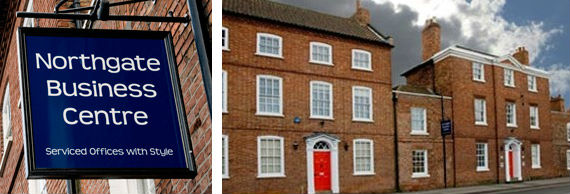
I met Sally of Northgate Business Centre at a seminar I gave on How to Write a Press Release. As usual, I offer all delegates a free marketing mentoring session, and Sally and her business partner Andrew take me up on this offer.
At our first session, we discuss the difficulties the business faces, in particular the website, which was not featuring in Google searches, and they felt needed updating. A quick search on Google showed that a lot of the top results are big property agencies, and a couple of local competitors are there too! In fact the website does not do the beautiful Georgian buildings justice, is quite tired looking, and cannot be updated by Sally and Andrew. They are also considering expanding the business but don’t know how to integrate the new building into current marketing plans, or how to increase the Business Centre’s profile.
All these issues were concerning Andrew and Sally, and they knew they needed to do something to address them, but they just didn’t know where to start. I reassured them that there was plenty we could do and set about suggesting some answers to their marketing and business development problems.
We discussed how the Business Centre is positioned, and how this should be reflected in the website. I suggested it is like a boutique hotel, and they agreed – they consider themselves to be a hotel for businesses, as the offices are fully serviced.
Over the next four months we meet four times, and during this time Andrew and Sally acquire the lease for a former telephone exchange just across the road from the Northgate Business Centre, and completely renovate the upper floor. Although this is a huge amount of work for them both, we agreed a marketing plan, so that the marketing does not get overlooked.
By the time the local MP opens the new office in the Exchange, they have professional photographs taken of both sites, a completely new website designed which they can update themselves, coverage in the local press, and a high quality folder which they can use to promote both sites. The new offices are filling rapidly, and enquiries are coming in steadily from the new website, which is ranking well in Google. Here is what Sally said about marketing mentoring:
“A business like ours needs lots of skills but neither Andrew or I are naturally good at marketing so the sessions with Beryl keep us focussed on what we should be doing, and at a price we can afford!”
The story doesn’t end there – I am still mentoring Sally and Andrew because they have learnt that marketing needs to be ongoing, and they have plans for future growth. And if you are looking for new offices, virtual offices or meeting rooms in the Newark area, do have look at the Northgate Business Centre website www.northgatecentre.com
So, if you’re stuck in a rut with marketing your business, but don’t have the budget to pay expensive agencies to do the work for you, why not talk to Ridgeway Marketing for some inexpensive, yet highly effective marketing mentoring sessions to get you kick started in the right direction?
Author: Beryl Pettitt
Mar 24, 2011 | Events
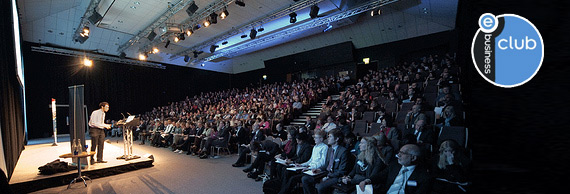
I was at the Online Marketing Conference at the East Midlands Conference Centre this week. Once again, it was very useful – and free! The speakers were excellent, particularly Graham Jones, Andrew Grill, and Ian Lockwood. Sadly I missed Media Snackers, whom I am told was brilliant too. Ian Lockwood explained the biggest change which is likely to affect all of our businesses – the launch of Panda by Google. This is a change in the ranking algorithm “to reduce rankings for low quality sites”. So what does Google think is a low quality site? It is all down to content – not enough content, poorly written content, content copied from other sites, and content that isn’t useful. So keep working on the content!
The Ebusiness Club has more funding for free training events in the East Midlands, so if you are interested, have a look at their website www.ebusinessclub.biz
